
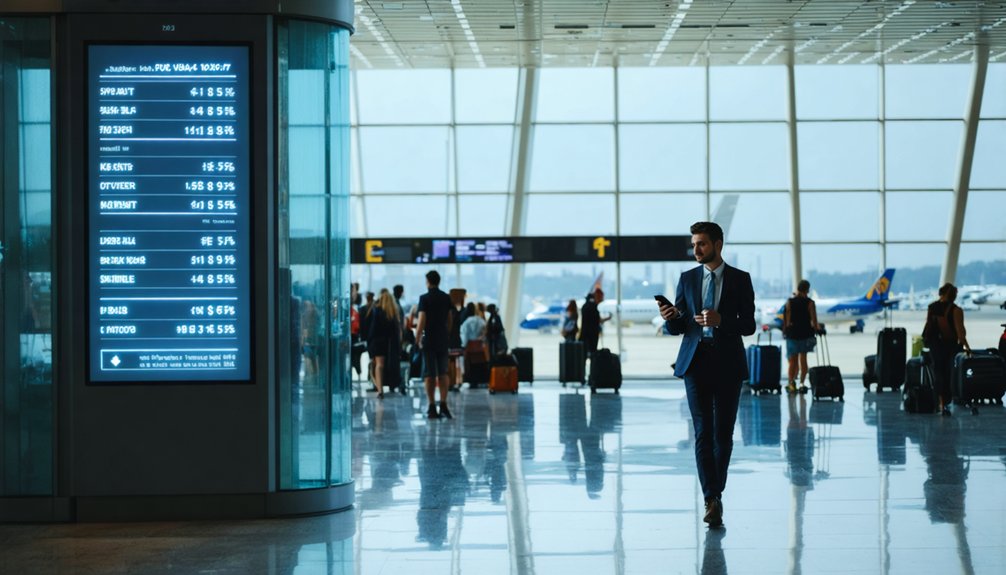

Adaptive pricing means airlines and hotels continuously adjust rates based on demand, inventory, and external factors such as fuel costs, weather, and events. Travelers see lower fares early, then higher prices as seats fill or dates approach. Loyalty discounts and flash sales can offset surges, while weekday bookings often beat weekend rates. Monitoring tools and AI alerts reveal price trends, and guardrails prevent budget shocks. Continuing the guide reveals precise timing windows and automated triggers for peak savings.
Highlights
- Prices change in real time based on demand, inventory, and external factors like fuel costs or events.
- Booking early (1‑2 months for domestic, 3‑6 months for international) usually secures the lowest fares.
- Mid‑week travel (Tuesday‑Thursday) and off‑peak seasons often offer 20‑30 % discounts.
- Loyalty programs and price‑cap alerts can offset surge pricing and keep spending within budget.
- AI‑driven monitoring tools and automated purchase triggers help travelers act before price surges.
Dynamic Pricing Really Means for Your Trip
Dynamic pricing translates real‑time demand into fluctuating fares and rates, making price elasticity a daily reality for vacation planners.
During peak events, flight costs can jump from $300 to $500, while off‑peak days often see steep discounts.
Travelers who book early capture lower prices, whereas last‑minute business trips typically encounter premium charges.
Loyalty discounts introduce personalized adjustments, rewarding frequent flyers and repeat hotel guests with reduced rates that offset surge pricing.
Automation reduces manual pricing updates and errors.Real‑time demand drives these rapid price changes.Continuous pricing enables airlines to set any price within a defined range for each individual request.
How Airlines and Hotels Use Algorithms to Set Prices
Hundreds of data points flow every second into sophisticated revenue‑management engines that dictate airline seat fares and hotel room rates.
Advanced machine‑learning algorithms ingest booking histories, competitor prices, weather forecasts, and social media trends, then apply revenue‑management systems to generate real‑time price recommendations.
Hotels adjust nightly rates based on length‑of‑stay, occupancy, and local events, while airlines use AI‑driven yield management to shift fare buckets, advance‑purchase rules, and ancillary pricing.
Continuous monitoring guarantees price elasticity is quantified, allowing instant increases when demand spikes and discounts when inventory lingers.
The process emphasizes algorithm transparency, showing travelers that pricing reflects measurable market forces rather than arbitrary decisions, cultivating trust and a sense of belonging within the travel community. Customer segmentation helps tailor prices to different traveler types. Real‑time data enables rapid response to sudden demand shifts. Revenue management systems provide data‑driven insights that guide pricing adjustments across channels.
The Biggest Triggers That Can Spike a Fare Overnight
A handful of forces can cause a fare to jump dramatically overnight, and they all stem from real‑time shifts in cost, demand, or inventory.
Fuel spikes, triggered by geopolitical tension such as the U.S.–Israeli–Iran conflict, double jet‑fuel prices and force airlines to raise base fares and surcharges within hours. Jet‑fuel prices can double overnight, prompting immediate fare adjustments.
Airline operating costs rise sharply when jet fuel accounts for 20‑30 % of expenses, amplifying the need for rapid fare hikes.
Booking demand patterns also play a critical role: business travelers booking late compress inventory, prompting algorithms to lift prices instantly.
Seat availability changes—cancellations followed by rapid re‑bookings—compress remaining capacity, prompting carriers to capture higher marginal revenue.
Ancillary fee additions, including last‑minute seat‑selection or resort fees, can further inflate the total cost.
Resort] are often mandatory and can be waived only under specific conditions, adding another hidden expense for travelers.
Together, these variables create overnight fare spikes that savvy travelers must monitor.
Simple Ways to Spot a Surge Before You Book
When travelers keep an eye on real‑time data, they can anticipate fare surges before committing to a purchase. Monitoring price‑alert timing via flight‑price predictor apps reveals live API forecasts and historical trend scores, allowing early detection of Wednesday spikes.
Checking search and booking patterns shows heightened query volume without conversions, a clear pre‑surge signal that AI engines flag. Evaluating seat‑availability indicators—such as shrinking inventory and rising load factors—confirms imminent price hikes.
Observing competitor and market pricing through VPN‑based regional checks uncovers rapid adjustments that often precede a surge. Finally, scanning external demand signals—including holidays, events, and weather forecasts—provides contextual cues.
Travelers who maintain itinerary flexibility can pivot to alternative dates or routes, avoiding inflated fares and preserving community confidence. Understanding seasonal demand patterns helps anticipate price shifts. Incorporating day‑of‑week trends can further refine surge predictions. The use of real‑time data enables airlines to adjust prices multiple times per day, reflecting immediate market conditions.
Timing Your Purchase: When Prices Tend to Drop
Leveraging historical fare data, travelers can pinpoint optimal purchase windows by aligning booking timing with documented price‑drop cycles.
Domestic routes typically see fare elasticity peaks 1‑2 months out, while international journeys benefit from 3‑6 months lead time; the 3‑8‑week window before departure often triggers the deepest discounts.
Seasonal trends reveal Tuesday‑Thursday bookings consistently undercut weekend pricing, and winter months (January‑February) and fall (September‑October) deliver up to 30 % lower rates due to low demand.
Mid‑season shoulder periods in spring and fall also present strong savings.
To avoid the steep 7‑14‑21‑day price surge, purchases should be completed before the 21‑day mark, leveraging historical patterns and demand‑driven fare elasticity for optimal value. The airfare surge of 73% since May 2020 underscores the importance of timing purchases to capture discounts. Flash sales often appear during low‑demand seasons, providing additional opportunities for reduced fares. Adding a2 on the optimal booking window can further maximize savings.
Tools and Alerts That Keep You Ahead of Dynamic Changes
Understanding when fares typically dip is only half the battle; staying ahead of rapid price shifts requires real‑time monitoring and automated alerts.
Modern price trackers aggregate data from airline sites, OTAs, and GDSs via scrape APIs, providing daily updates and instant email notifications.
Tools such as Prisync and PageCrawl offer multi‑channel tracking, URL‑based, channel‑based, and hybrid monitoring, while AI‑powered summaries convert raw changes into actionable understanding.
Travelers can route price alerts through Slack, Discord, Teams, or webhooks, ensuring the preferred channel supplies timely signals.
Historical charts visualize trends, and predictive analytics forecast demand spikes, enabling users to act before competitors adjust fares.
This integrated alert system creates a community of informed travelers who consistently secure best rates.
Protecting Your Budget: Guardrails and Caps to Avoid Shock Prices
A well‑defined guardrail system—comprising maximum‑price caps, budget alerts, and automated purchase triggers—prevents travelers from falling victim to sudden fare spikes.
By setting budget caps that align with historical price baselines, users receive real‑time notifications when fare thresholds are approached.
Integrated demand‑forecasting data highlights seasonal peaks, allowing the system to adjust caps dynamically while preserving a sense of community belonging among savvy travelers.
Automated triggers execute purchases the moment a price dips below the defined threshold, eliminating hesitation and protecting the wallet.
This proactive approach leverages competitor rate tracking and off‑peak booking insights to maintain consistent spending limits, ensuring that unexpected price volatility never compromises the travel experience.
References
- https://iweensoft.com/glossary/dynamic-pricing
- https://pros.com/learn/blog/what-exactly-is-dynamic-pricing-airline-industry/
- https://www.reslogic.com/blog/dynamic-pricing-tour-operator-profitability
- https://www.siteminder.com/r/hotel-dynamic-pricing/
- https://bluestreetdata.com/use-cases/dynamic-pricing-in-travel-hospitality/
- https://www.mccrackenalliance.com/blog/dynamic-pricing-101-how-real-time-pricing-drives-revenue
- https://www.iata.org/contentassets/0688c780d9ad4a4fadb461b479d64e0d/dynamic-pricing–of-airline-offers.pdf
- https://fareharbor.com/blog/using-dynamic-pricing-without-hurting-long-term-demand/
- https://www.nimbleway.com/blog/dynamic-pricing-and-how-it-works
- https://ideas.com/what-is-dynamic-pricing/